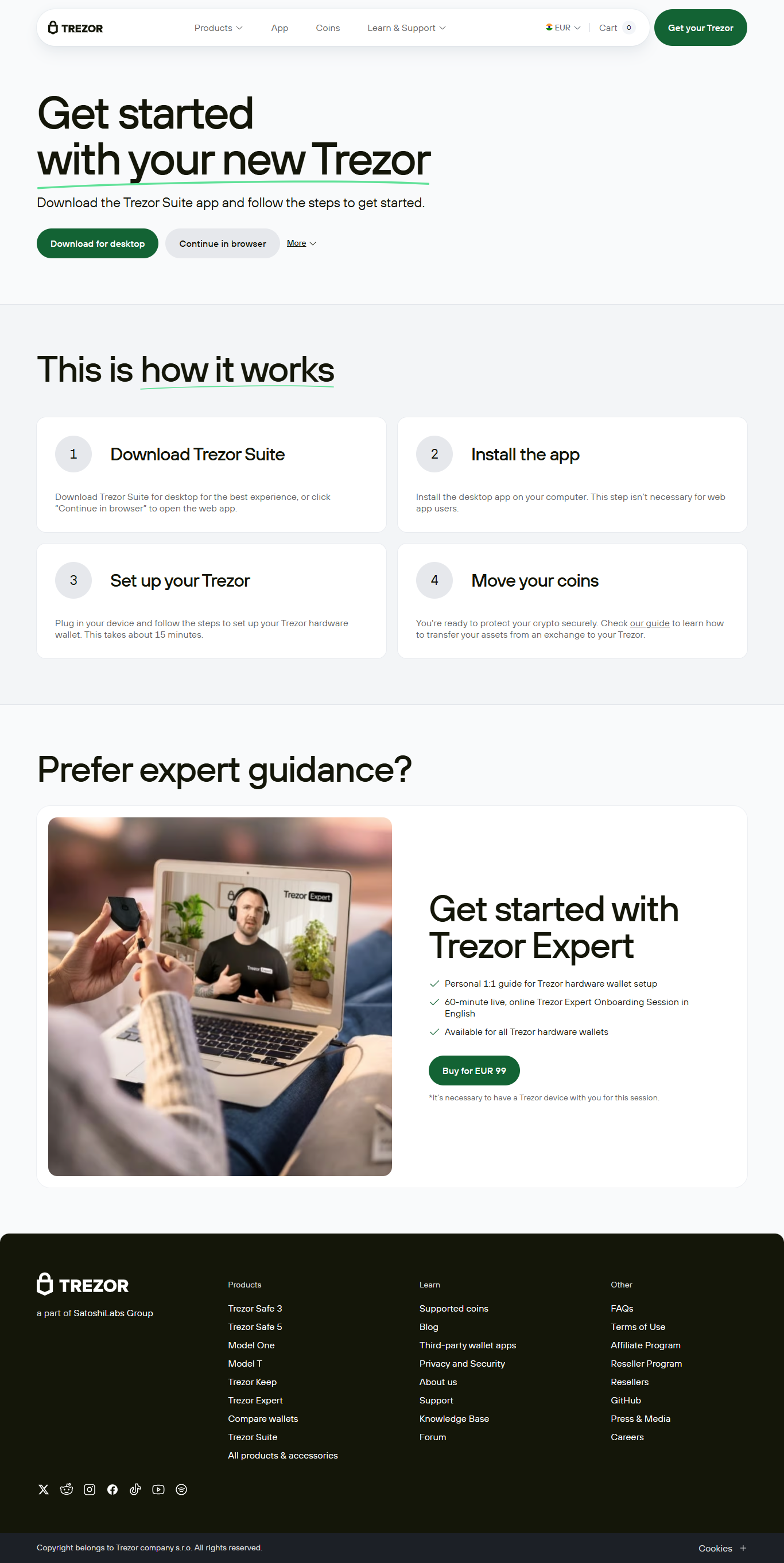
Trezor Login – 2025 Secure Access Guide for Trezor Users
Learn how the Trezor login process works, why it’s different from password-based systems, how to access your wallet safely through Trezor Suite, how hardware verification protects your crypto, and how to avoid phishing traps. Fully inline-styled, long-form HTML.
What Does “Trezor Login” Mean?
New crypto users often search for a “Trezor login page” or a “Trezor account login” — but this concept doesn’t exist. Trezor does not use usernames, passwords, online dashboards, or website logins. Instead, the Trezor login system is based entirely on device authentication.
When you log in to your Trezor, you’re actually unlocking your hardware wallet with your PIN and then authorizing access inside Trezor Suite, the official crypto management app.
Trezor Login = Unlocking your Trezor device with a PIN + connecting it to Trezor Suite securely.
How Trezor Login Works (Step-by-Step)
The Trezor login process relies on physical confirmation. There is no remote or cloud-based authentication. Here is the complete workflow:
- Open Trezor Suite on your computer or browser.
- Connect your Trezor device using a USB cable.
- The device prompts you to enter your PIN on the hardware screen.
- After correct PIN entry, the device unlocks.
- Trezor Suite automatically recognizes the unlocked device.
- You now have access to accounts, portfolio tools, and transaction features.
This physical verification model is what makes hardware wallets like Trezor resistant to online attacks, keyloggers, malware, and phishing.
Quick Trezor Login Setup Guide
1. Install Trezor Suite
Download it from the official onboarding page (Trezor.io/start). Avoid unverified links.
2. Connect Your Trezor Device
Use the original USB cable for stable connection and security.
3. Enter Your PIN
Your hardware wallet unlocks only after you enter the correct PIN directly on the device.
4. Access Trezor Suite Dashboard
Your wallet is now ready — add accounts, send funds, or manage your portfolio.
Trezor Login vs Traditional Login
Traditional Login
- Uses email + password
- Stored on centralized servers
- Vulnerable to remote hacking
- Passwords can be leaked
Trezor Login
- No passwords or online accounts
- PIN stored only on device
- No remote access possible
- Physical confirmation required
How Trezor Login Protects You
Because Trezor requires PIN entry directly on the device, it eliminates many online attack vectors.
✅ Remote Hacks
No remote attacker can sign transactions without physical device access.
✅ Phishing Pages
Trezor login never happens on a website, preventing seed theft scams.
✅ Malware Protection
Even infected computers cannot sign transactions without hardware approval.
Common Trezor Login Mistakes
❌ Searching “Trezor login” on Google
Fake websites often appear as ads and ask for recovery seeds.
❌ Entering Seed Words Into a Website
Trezor will NEVER ask for your recovery phrase online — only on the device.
❌ Leaving Device Unlocked
Always disconnect your Trezor when not using it.
❌ Ignoring Firmware Updates
Updates contain essential security patches.
Trezor Login Security Checklist
- Use Trezor Suite — never websites — to access your wallet
- Never type your seed phrase into a computer
- Verify receiving addresses on your hardware device
- Use a secure and hard-to-guess PIN
- Disconnect your device after use
- Enable passphrase for added protection
Trezor Login – FAQ
Does Trezor have a login page?
No. Trezor login happens through your hardware wallet + Trezor Suite.
Can I log in without a Trezor device?
No. Physical hardware is required for authentication.
Does Trezor store my PIN online?
No. Your PIN is stored only inside the secure chip on your device.
Can malware steal my login?
Not without your physical device and PIN.
Conclusion – Trezor Login Keeps Your Crypto Physically Protected
The Trezor login method is fundamentally different from online wallets and exchanges. By requiring local PIN entry and physical confirmation on your hardware device, Trezor ensures that nobody — not hackers, not malware, not phishing sites — can access your crypto assets.
Whether you're sending Bitcoin, managing Ethereum tokens, or exploring Web3 tools, Trezor gives you control through secure hardware authentication.
With Trezor login, your crypto stays yours — offline, secured, and protected.